
EVERY PROJECT NEEDS THREE YEARS OF PAPERWORK FIRST
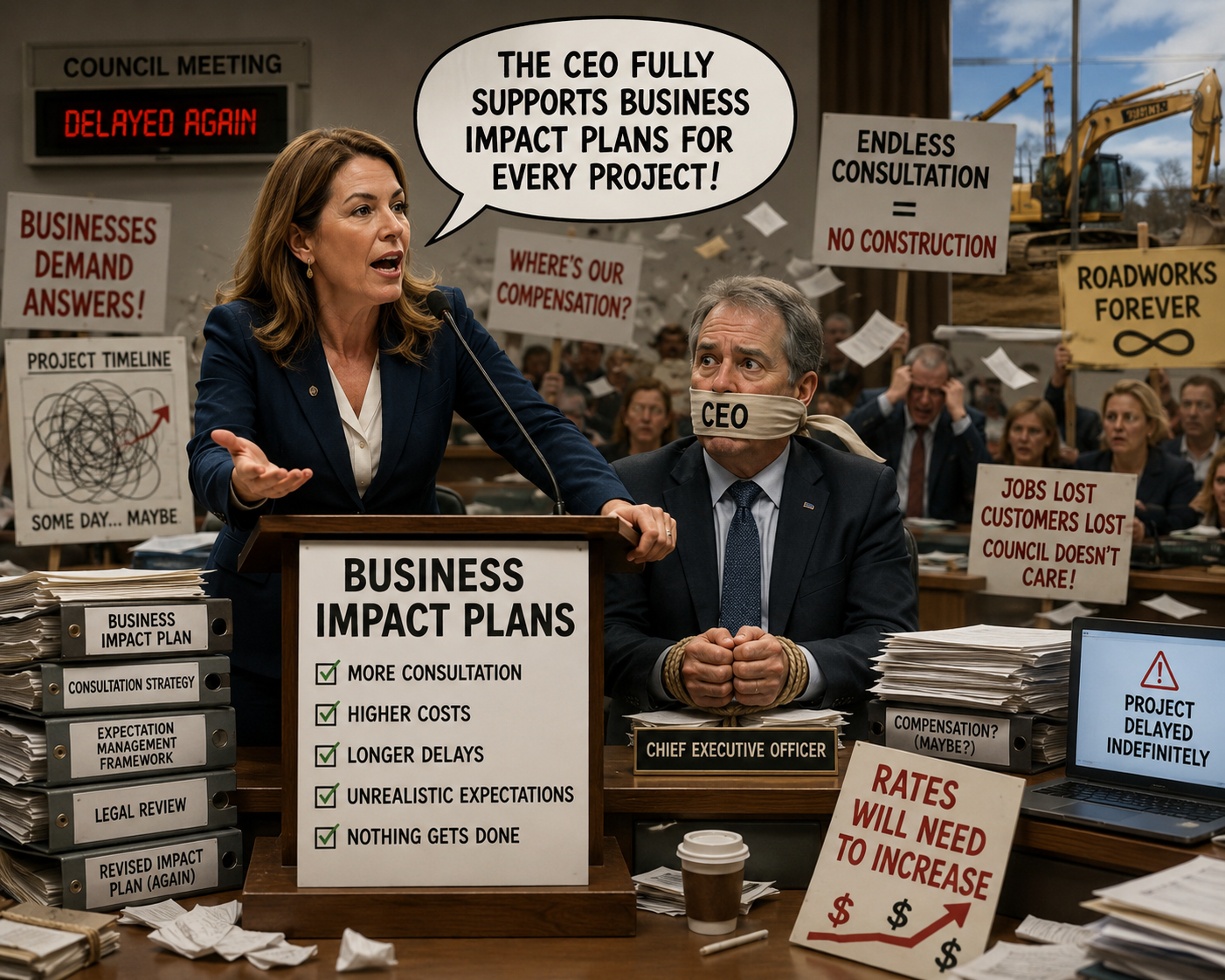
COUNCIL ACCIDENTALLY INVENTS ‘INFRASTRUCTURE PREVENTION PLAN’
A Chief Executive Officer has apparently become the public champion of a proposal before anyone was entirely sure he’d actually championed it.
“Why wait for the CEO to explain his own position when someone else can do it for him?” was heard in the halls.
Small Business Impact Plans are being hailed as the biggest stimulus package for consultants, lawyers and engagement specialists since councils discovered the phrase “stakeholder consultation.” Under the proposal, from one Cr - every major infrastructure project would first need to identify every affected business, assess every conceivable impact, consult every stakeholder, consider every alternative, document every objection, explain every rejection, revise the report, peer-review the revision and then consult everyone again because someone couldn’t make the first meeting.
Experts warn the unintended consequences could be spectacular:
Roads, footpaths and car parks delayed while reports are written about reports.
Infrastructure costs blowing out under the weight of endless studies, consultants and legal reviews.
Ratepayers discovering that every new layer of bureaucracy eventually appears on the rates notice.
Businesses believing an “Impact Plan” guarantees compensation when the project still proceeds.
Lawyers delighting in fresh opportunities to argue Council failed to follow page 147 of its own mandatory process.
“If every project requires another planning process before it can begin, don’t be surprised when the planning process becomes the project.” was said
“We thought we were paying Council to build infrastructure,” one resident said. “Turns out we’re funding an infrastructure impact plan, a consultation strategy, a legal review, an expectation management framework and, if we’re lucky, maybe one day… a footpath.”
The CEO was understood to be considering the revolutionary idea of speaking for himself before someone else did, while residents quietly wondered whether the next mandatory document would be a Ratepayer Impact Plan explaining why rates had increased to pay for all the other impact plans.