
TRUST, CONSISTENCY & ACCOUNTABILITY

She said it herself -
“I declare a prescribed conflict of interest under Chapter 5B of the Local Government Act 2009 in relation to item 11.2.1 - Noosa Aquatic Centre Café lease renewal.
I engaged with the applicant during the live procurement process.
I will leave the room while this matter is considered and voted on.”
In a bold leap forward in procedural creativity, a seasoned councillor with more than six years’ experience - and a legal background, no less - has reportedly pioneered a new approach to local government tenders.
This is governance by someone who should know exactly where the lines are.
Instead, she has quietly suggested product changes to a café operator in the middle of a live tender process.
The basic standard required in local government for Crs. is to be:
CLEAR DIRECT ACCOUNTABLE TRANSPARENT ETHICAL LEGALLY RESPONSIBLE
- does this same standard apply all the time, or only when it suits?
Are we witnessing:
Contradictions with hints of instability?
because this is the same councillor widely regarded in meetings as a steadfast guardian of transparency - quick to call out others for even minor procedural deviations, and a vocal enforcer of strict compliance with governance rules. Most notably, recently spearheading (by demanding her name on relevant Motion) legal advice re a highly publicised conflict-of-interest controversy - involving a donation to the Mayor’s campaign from his mother - an episode some described as a masterclass in scrutiny, and others as an exercise in creative amplification - for a bike path that the elderly lady can’t even use.
And it inevitably raises a broader question:
if this level of informal involvement can occur - in a live procurement process, what other “helpful interventions” might be taking place out of public view? Not as an allegation - but as a governance concern that goes directly to trust, consistency, and accountability.
Because trust in public office isn’t built on flowery electioneering type speeches. It’s built on consistency.
You can’t demand strict adherence to rules in meetings, then blur the lines behind the scenes. You can’t position yourself as a guardian of process whilst at same time privately engaging in behaviour that’s contrary.
And you can’t expect the public to ignore the gap between what’s said and what’s done.
This isn’t about one declaration. It’s about a pattern. When a councillor is quick to enforce transparency on others but ends up declaring their own conflict after engaging - during a live procurement process, it raises a bigger issue - what else happens that isn’t declared, documented, or visible? Because that’s where confidence breaks.
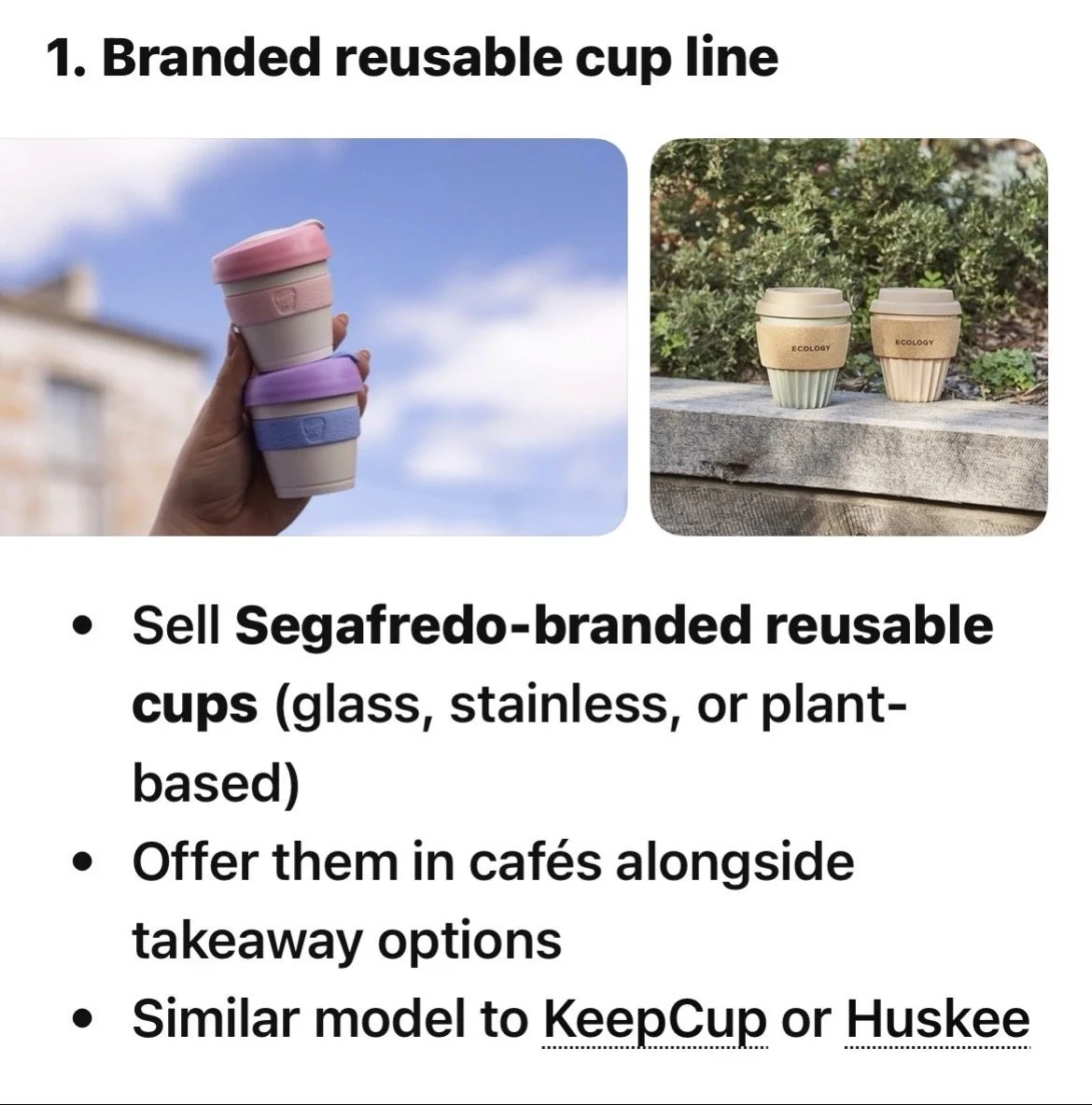
Why no declaration of close association in family to this coffee brand? Are these cups in pipeline?
Public trust relies on three things:
The same rules applied every time
No exceptions when it suits
No ambiguity about who is influencing what
Anything less invites doubt, once doubt sets in, accountability becomes selective.
This is why consistency matters more than rhetoric. If transparency is the standard, it must be absolute - not situational. If accountability is expected, it must be mutual - not directional. And if trust is to be earned, it must be protected - not tested.
Because in the end, the public isn’t watching what’s said in the room.
They’re watching what happens - when no one thinks they are.