
Turtles, Towers & Teacups: The Curious Case of Noosa
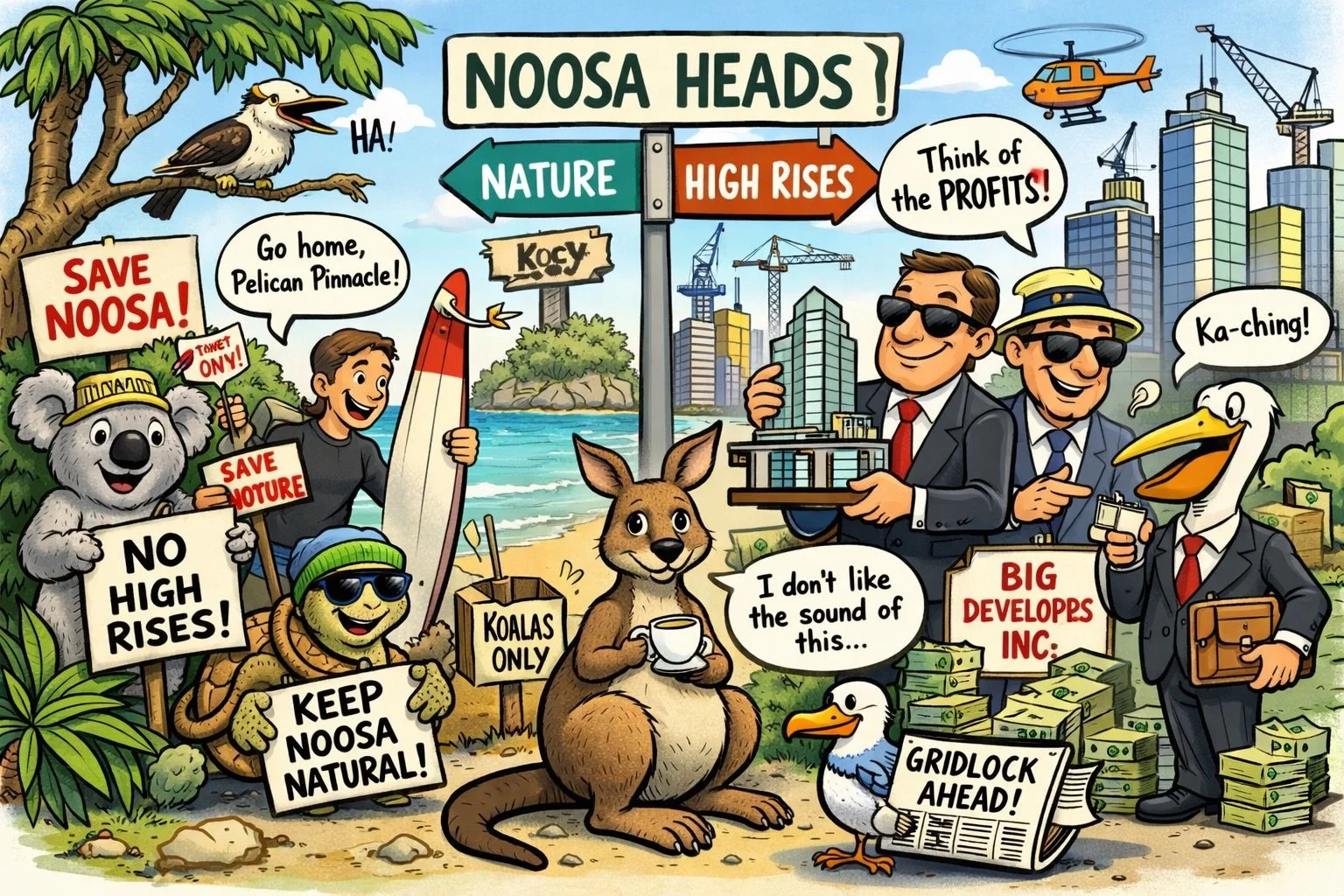
In a pristine corner of Queensland where roundabouts wisely outnumber traffic lights, Noosa Heads is fighting to protect its very soul from aggressive corporate development.
On one side stand the Noosa Biosphere defenders. They fiercely protect the Noosa Plan to ensure no concrete monstrosity ever eclipses the height of a mature paperbark tree.
On the other side are the interstate developer syndicates. They arrive clutching ridiculous architectural renderings of "vertical lifestyle solutions," sweating through linen suits while pitching high-rise blocks with absurd names like The Azure Ascend and Oasis Altitude.
The question is straightforward. Should the skyline remain defined by natural pandanus palms, or should it be permanently scarred by developer greed?
Local environmental groups rightfully insist that Noosa’s magic relies entirely on its low-rise footprint.
“Koalas,” one resident explained perfectly at a community consultation, “have terrible spatial awareness in elevators.”
Noosa National Park currently presides over the headland with quiet authority. It is a vital sanctuary of coastal heath, glossy black cockatoos, and scrub turkeys with main-character energy. It does not need elevator shafts. It does not require valet parking. It certainly does not need a presales brochure to justify its existence.
Developers lazily argue that financial progress must break the tree canopy.
“We envision vertical vibrancy,” declared one spokesperson, gesturing to an artist’s impression featuring a cantilevered infinity pool blocking out a golden sunset.
Residents correctly responded by imagining the January gridlock of Porsche Cayennes and BMW X5s on Hastings Street multiplied by fifty, collectively shuddering at the thought of the environmental degradation.
Down at Main Beach, the surf continues its rhythm. Locals know Noosa’s appeal is not an accident of nature. It is a fortress built of fiercely protected view corridors, prohibited illuminated signage, and a necessary stubbornness against corporate overreach.
“Once you build a skyline,” noted a Hastings Street barista, “you can’t unbuild it. It becomes a permanent scar on the horizon.”
Developers claim demand is insatiable and the ocean looks better viewed from Level 17 with a martini. Environmentalists fire back that sea breezes do not require penthouse pricing and local sea turtles are completely indifferent to a developer's capital gains tax discount.
The defense of the town remains fiercely civil. Protest signs feature bespoke typography and public forums conclude well before the evening sound-healing sessions begin. Even the lorikeets squabble within the acceptable decibel limits of the local noise ordinance.
The stakes are Noosa's survival as a sanctuary. The town must remain a place where the loudest sound is a territorial kookaburra and the tallest structure is a Norfolk pine. The community refuses to let glass towers rise like ambitious periscopes scanning the coast for offshore investment.
For now, the pandanus trees lean toward the ocean, surviving on salt, sand, and the ironclad legal protections of the town plan. The contest against the developers continues. It is fought with strict bylaws, formatted legal threats, and strongly worded letters defending the local ecology.
When twilight settles over the Coral Sea, the community remains ready to defend their natural paradise tomorrow morning over an $8 flat white served in a compostable cup.