CASTING VOTES ARE LEGAL
BUT WE DON’T LIKE IT
‘EXPERTS’ ON FACEBOOK WEIGH IN REGULARLY PROVING THIS POINT
LOCAL OUTRAGE ENDS ABRUPTLY AFTER RESIDENTS ACCIDENTALLY READ STANDING ORDERS
NOOSA TOURISM FUNDING - A dramatic public controversy came to an unexpected halt this week after several residents discovered that the meeting procedure they had spent days denouncing was, in fact, written clearly in the Standing Orders.
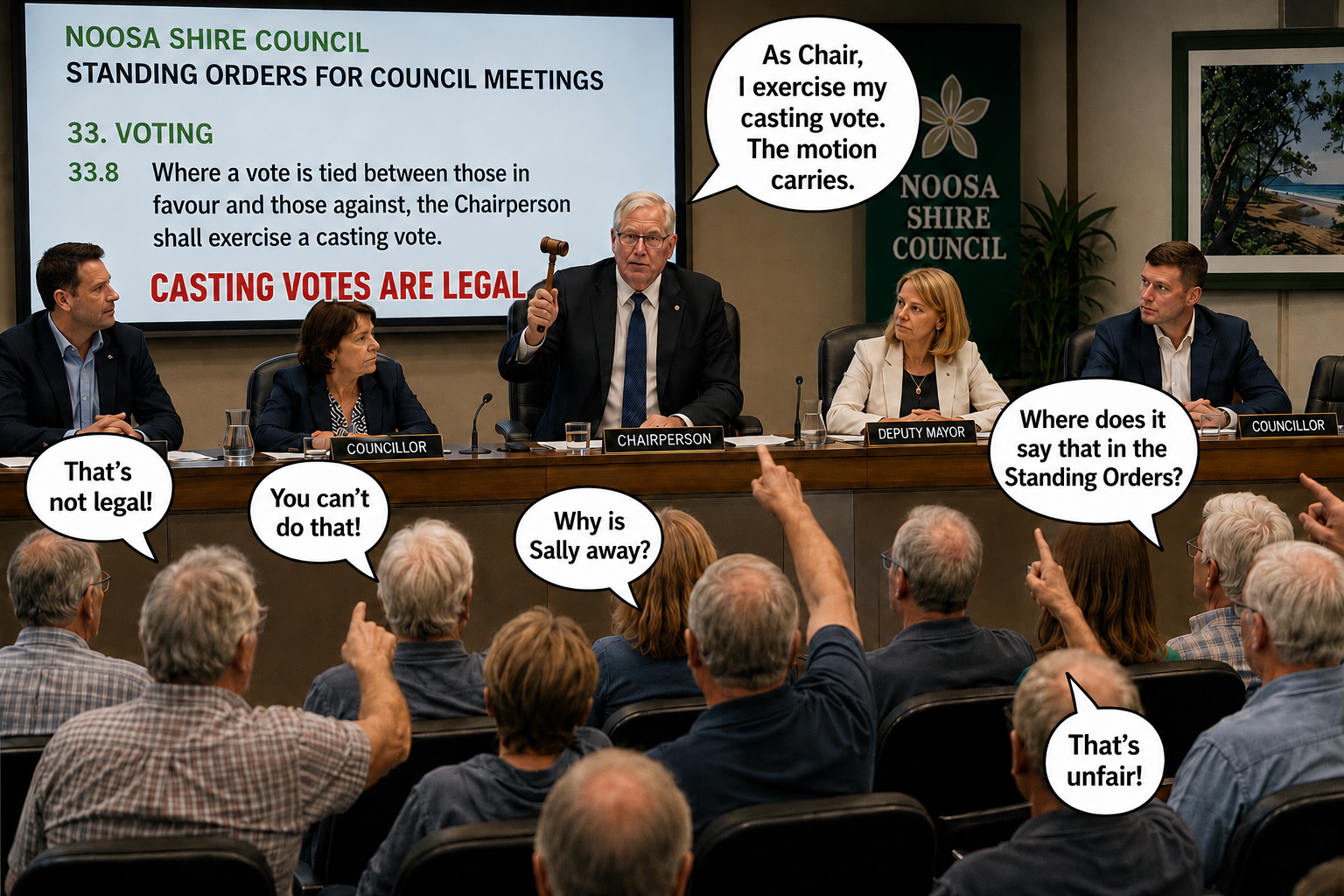
The controversy centred on a Chairperson exercising a casting vote following a tied vote at a meeting. Outraged observers immediately declared the action “illegal”, “undemocratic”, and “probably against the Constitution”. Witnesses reported scenes of confusion when one attendee asked, “Where does it say that in the Standing Orders?” Unfortunately for the protest movement, someone then located the relevant clause.
Clause 33.8 states that where a vote is tied between those in favour and those against, the Chairperson shall exercise a casting vote. Local governance experts described the discovery as “a difficult moment for people who had already written several angry Facebook posts.”
Observers noted that the debate quickly shifted from voting procedures to entirely unrelated matters, including attendance, meeting refreshments, and speculation about why Sally was away. Political analyst Dr. Common Sense said the episode illustrated a well-known principle of public debate.
“When people confidently argue against rules that are written down in black and white, it provides useful context for evaluating their expertise on other topics.”
Then:
EXPERTS BECAME BAFFLED BY ASSUMPTION COUNCILLORS MUST ANNOUNCE VOTES IN ADVANCE
Further confusion emerged when some residents argued that the outcome should have been obvious - because a particular absent councillor - enjoying the French Riviera with family - was supposedly known to oppose tourism funding. Yet never said so. Governance observers were quick to point out that councillors are under no obligation to publicly signal how they intend to vote before a meeting. Also the casting vote doesn't have to align with pre conceived imagined feelings of an absent member. The claim that a councillor was certain to vote against the motion because they were allegedly ‘anti-tourism funding’ also encountered difficulties when investigators searched for evidence that the councillor had actually said any such thing.
After an exhaustive review of public statements, media reports and meeting records, researchers concluded that confidently predicting a councillor’s vote based on something they never stated was a bold strategy.