
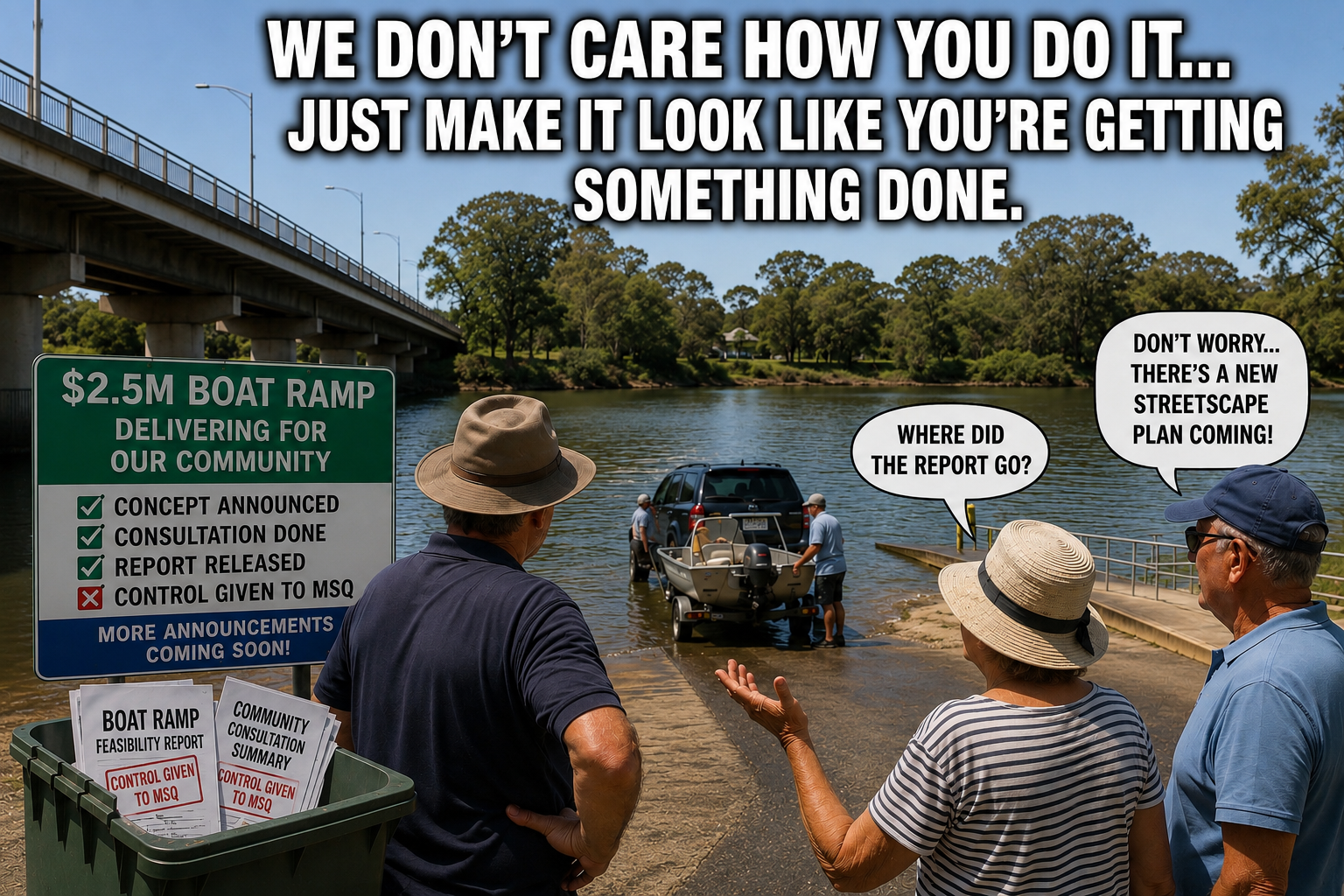
‘Changing The Subject’ Still Most Reliable Infrastructure Program.
Voters Discover Consultation Is The New Deliverable
Political scientists have reportedly abandoned decades of research into ethics after discovering Australian voters possess an extraordinary ability to separate how something gets done from whether they think it got done at all.
The breakthrough came after observing thousands of residents nod approvingly at political caution before immediately asking, “Yes… but are they listening to the community?” It seems People will spend twenty minutes complaining about projects, proposals and decisions they don’t like.
Then they’ll support whoever appears most committed to stopping things they believe should not happen.”
The discovery has sent shockwaves through campaign headquarters, where staff have immediately updated training manuals. Chapter One, previously titled ‘Integrity Matters’, has now been replaced with ‘Never Be Seen As Ignoring Community Concerns.’ “It’s actually very simple,” explained one veteran political adviser. “If a project is moving forward and someone objects, don’t defend it. Explain that you’re listening and if the project has already been delayed?” “Explain that the delay proves you’re listening.”
“And if someone asks why nothing is happening?” “Explain that responsible decision-making takes time.”
Locals say they’ve begun noticing the pattern. A project is proposed. Concerns are raised. A politician announces they are standing with the community then the project quietly enters a lengthy period of consideration. “It’s almost artistic,” admitted one resident. “Like watching a magician make something disappear while assuring everyone it was only because they were respecting the audience’s wishes.”
Political insiders insist there is no strategy whatsoever, describing the repeated use of objections, reviews and community consultation as “a genuine commitment to hearing every possible concern.”
Residents, meanwhile, remain confused by several unresolved mysteries, including whatever happened to the boat ramp report, why the Peregian Street project appears to have wandered off into the political wilderness, and how every discussion about those issues somehow ends with another explanation about why action cannot yet be taken.
Is it because: The modern political environment rewards anyone who can turn opposition into responsibility? You don’t have to be the person delivering the project. You just need to be the person explaining why it isn’t the right time. The only flaw in the strategy, analysts warn, is that eventually voters stop counting objections and start counting outcomes.
At that point, carefully worded statements about consultation, community wishes and responsible decision-making become less persuasive than inconvenient questions such as:
“So… is anything actually happening?”