
GRASS, GLORY AND GOVERNANCE: WHO REALLY PAYS THE PRICE?
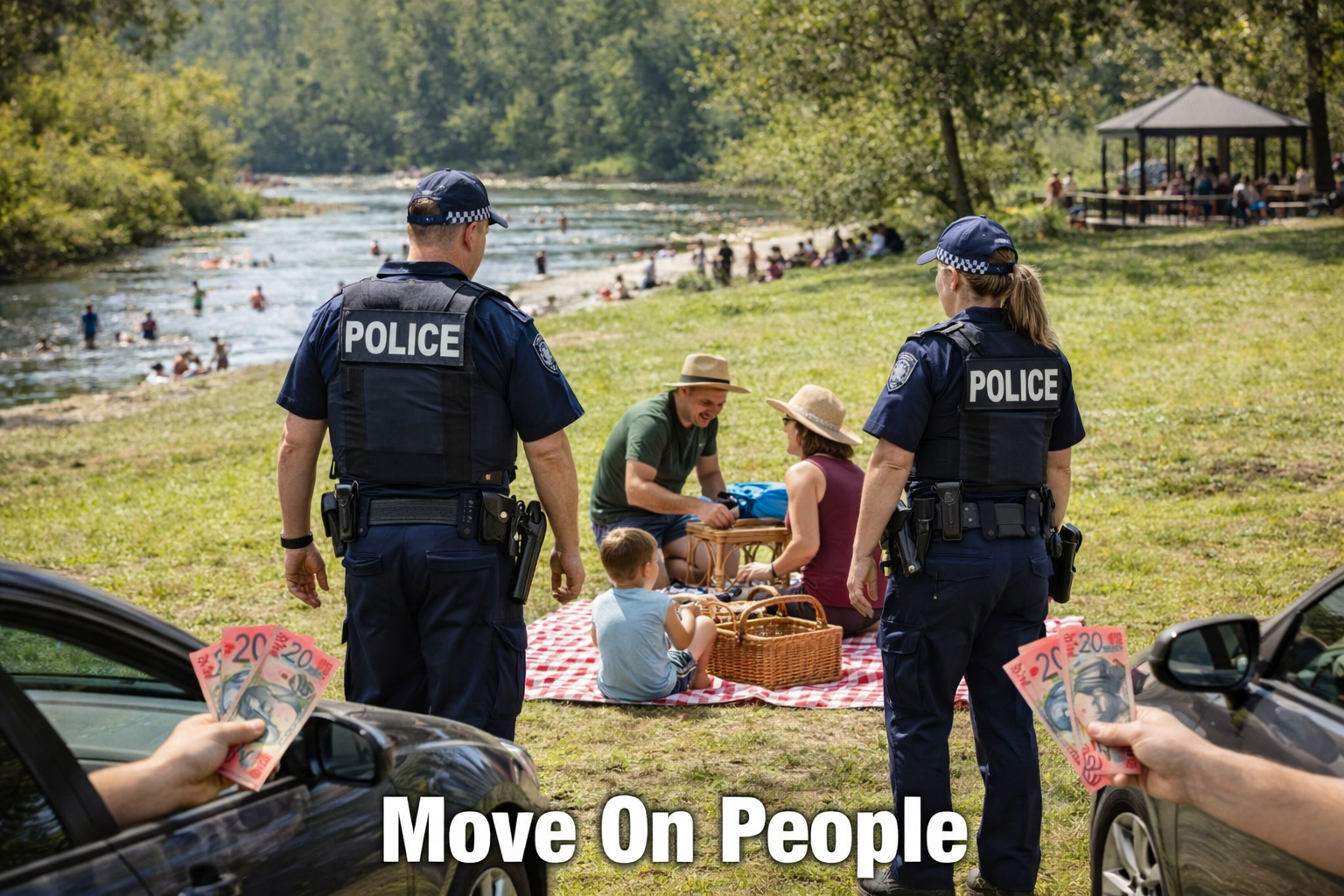
CARS OVER PEOPLE
In a masterclass of modern local government, a councillor has proudly accepted a humanitarian award tied to a community group that just happens to benefit from activities on Council land - land that is now less “park” and more a “patchwork repair project.”
Residents, watching their would-be picnic space steadily churned into worn turf and muddy ruts, have been reassured this is all part of a noble cycle: community use on public land, followed by ratepayer-funded rehabilitation of that same land.
Efficiency, after all, is about keeping money moving - even if it’s moving in a circle.
The more serious issue, however, is no longer being brushed off so easily. Because when a councillor publicly recognised by an organisation is then involved in decisions affecting that organisation’s ongoing use of public land, it creates what many would see as a very likely perceived conflict of interest - one that risks eroding community trust in whether decisions are being made free from influence.
Observers note the land in question is increasingly valued not for its shade, amenity, or community use, but for its remarkable ability to absorb wear, tear, and public funding in equal measure.
Meanwhile, residents advocating for a permanent picnic park - grass that stays grass, not a seasonal casualty - are learning an important lesson: in the hierarchy of interests, passive community use doesn’t always carry the same weight as organised activity and established relationships.
The real question is: whether this passes the Pub Test re public confidence and trust.