
In praise of properly coordinated rivers: an opinion
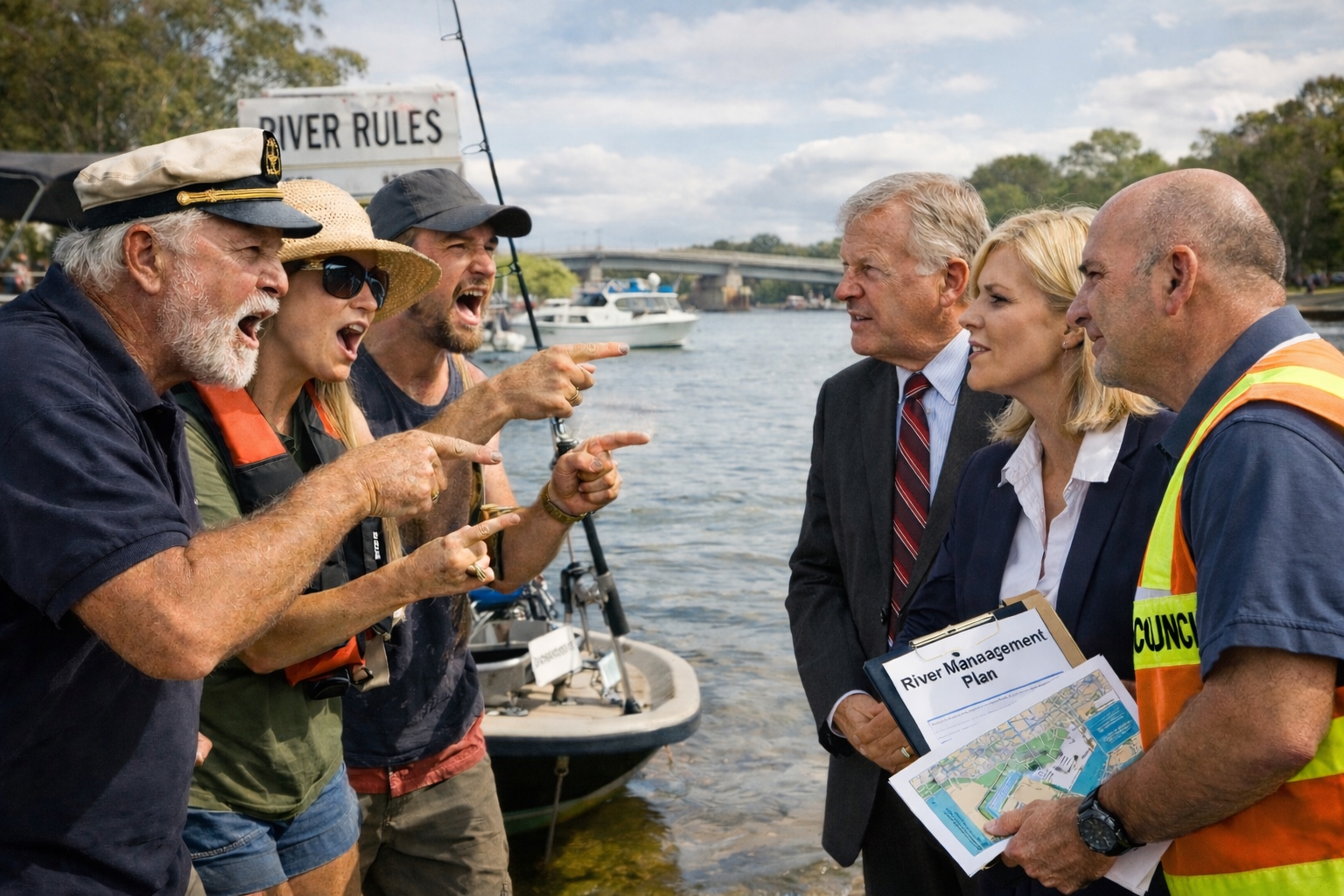
Mob Mentality Does Not Rule
There was a time - quaint really - when people believed a river should be managed primarily by those who used it every day.
Kayakers, Fishers, including Commercial operators, Tourism businesses.
Charming.
But we’ve evolved from profit driven models, reaping what they don’t sow at expense of the environment.
As discussion turns to the future governance of the Noosa River, following a new State body called an “Authority” a more sophisticated truth has emerged: great rivers, like great cities, benefit from coordination.
The Quiet Strength of a Seat at the Table:
Including local government representation on a river authority board is not about control - it’s about connection.
Because while the river flows freely, everything around it does not:
• boat ramps, dredging
• foreshore access
• stormwater systems, silt deposits
• public amenities
All sit within a broader planning framework that doesn’t stop at the water’s edge.
A council voice at the table simply ensures that:
what happens on the water and what happens on land are speaking the same language.
Accountability, Elegantly Built In:
There’s something reassuring about decisions being shaped by people who operate within:
• public scrutiny
• transparent processes
• clearly defined responsibilities
It brings a certain… structure. Not the heavy-handed kind - more the quiet confidence that comes from knowing:
decisions aren’t just informed, they’re accountable.
Representation Without the Guesswork:
Of course, the idea of “lived experience” is compelling. But rivers, like communities, are wonderfully diverse:
• early morning paddlers
• weekend boaters
• commercial operators
• environmental advocates
Trying to distil all of that into a handful of board seats is… ambitious.
Local government, by contrast, already operates as a convergence point for these voices -
not replacing them, but carrying them forward in a structured way.
Alignment: The Unsung Hero:
Much of effective governance is not visible.
It happens in alignment:
• between plans
• across agencies
• over time
A council presence doesn’t dominate this process - it smooths it.
Fewer crossed wires. Fewer parallel processes.
More decisions that actually connect from idea to implementation.
Planning for a Moving Future:
Rivers are dynamic systems, shaped not just by today’s use but by tomorrow’s conditions.
Frameworks like coastal hazard planning may not always be light reading,
but they do offer something invaluable: a long term view.
Ensuring that river decisions sit comfortably alongside these frameworks is less about constraint and more about consistency - a way of making sure today’s choices still make sense decades from now.
A Balanced Model:
None of this diminishes the importance of those who know the river intimately.
Their insight is essential.
But perhaps the most effective model is one where:
• experience informs
• institutions connect
• and decisions land where they can actually be delivered
Final Thought:
A river may appear effortless—flowing, shifting, adapting. But behind that simplicity often sits careful coordination.
And sometimes, the difference between a good idea and a lasting outcome
is simply having the right voices - not louder, not dominant -
just present in the room where everything comes together.